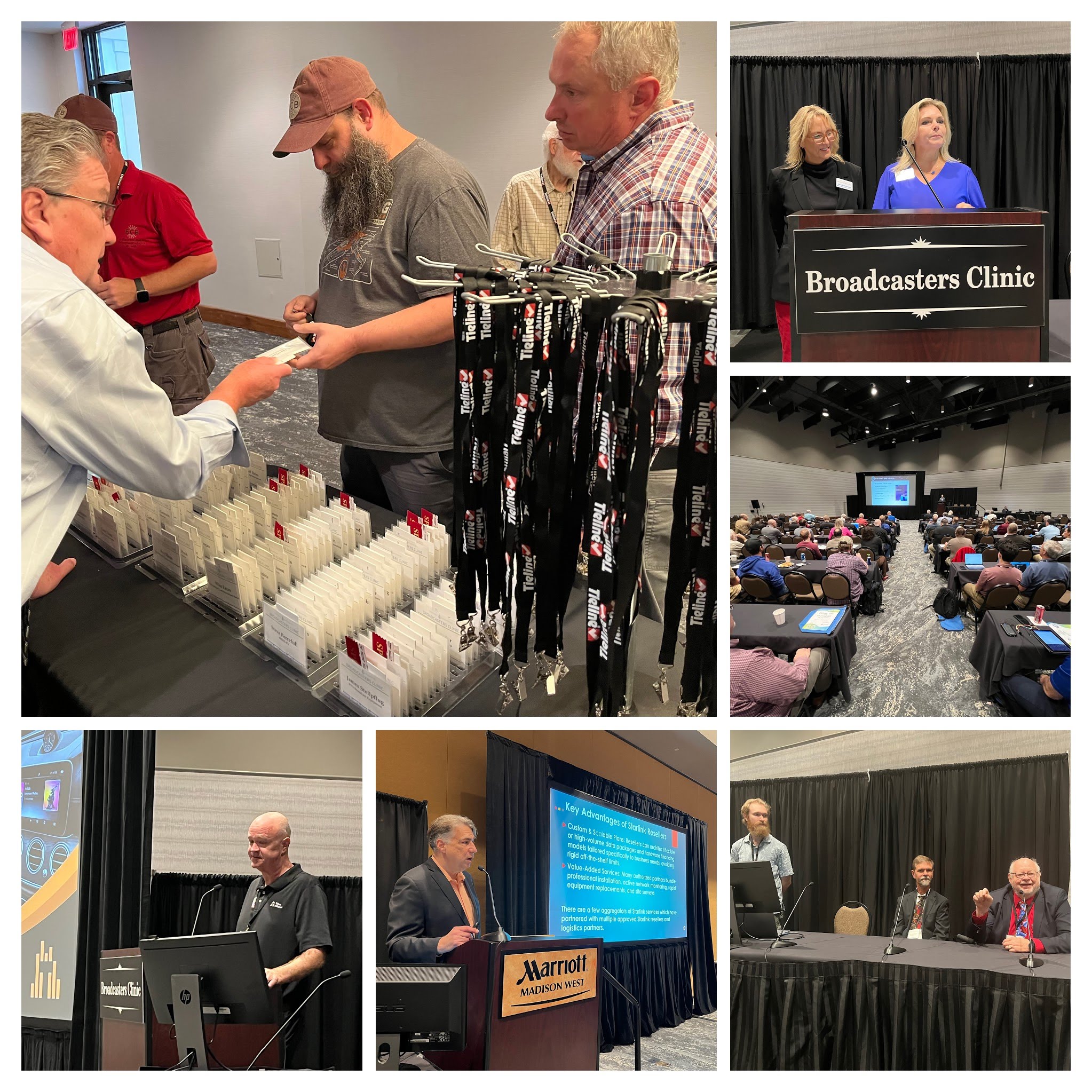
I’m pleased to report that the 70th Midwest Regional Broadcasters Clinic was a tremendous success. This annual event, a collaborative effort between the engineering teams of the Wisconsin Broadcasters Association and the Minnesota Broadcasters Association, attracted attendees from 36 states, Washington, D.C., and four countries, making it one of the most geographically diverse Clinics to date.
The exhibit hall featured more than 43 exhibitors, showcasing the latest products and technologies for the broadcast industry. The feedback from both attendees and exhibitors was overwhelmingly positive. I would like to thank the Program Committee and the Midwest Regional Broadcasters Clinic staff for their hard work and dedication in making this year’s event a success.
The Clinic featured presentations from nationally recognized industry leaders on topics relevant to both radio and television broadcasters, including:
- Emerging Technology That Will Shape Broadcast’s Future – John Clark, NAB
- Challenges and Technical Considerations for Wireless Mic and IFB Use at Large Events – Chris Crump, Comrex
- The Evolving Transition Toward a Dynamic Media Facility – James Stellpflug, EVS Broadcast Equipment
- The Future of Radio Content Delivery – Panel Discussion featuring Kris Tarr (K-LOVE) and Drew Smith (Civic Media)
- ATSC 3.0 – Why the Rush to Turn Off ATSC 1.0? – Harvey Arnold, Sinclair Broadcast Group
- Washington Update – David Oxenford, Wilkinson Barker Knauer LLP, covering FCC activity over the past two years, broadcast ownership reform, and the future of the ATSC 3.0 rollout
- Transmission System Troubleshooting Techniques – Steve Wilde, American Amplifier Technologies
One of the Clinic’s most popular traditions returned on Tuesday with Nuts and Bolts: Transmitter Site Security and Safety, which included the annual brat and fried cheese curd dinner—a favorite among attendees.
The Clinic Program Committee extends its sincere appreciation to the Wisconsin Broadcasters Association Board, Michelle Vetterkind, and Kyle Geissler, as well as the Minnesota Broadcasters Association, Wendy Paulson, and Tim Hyde, for their continued support, leadership, and partnership. Their commitment remains essential to the ongoing success of the Midwest Regional Broadcasters Clinic.
Respectfully submitted,
Jim Steinhart
Program Chair
Midwest Regional Broadcasters Clinic


